Showing posts with label kodak super 8 film. Show all posts

Friday, December 14, 2012

Urban Outfitters Inc., releases Pro8mm's Rhonda CAM


Urban Outfitters Inc. Releases Pro8mm's Rhonda CAM - Dec. 17, 2012

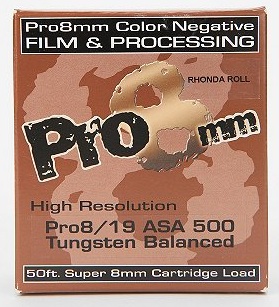
The funky, fashion mega house Urban Outfitters Inc. is now selling Pro8mm's Rhonda CAM on line at www.urbanoutfitters.com. Additionally, they will carry the Pro8/19 (500T) super 8 film stock, inclusive of pre-processing and HD scanning to an Apple TV digital file.


In June 2012, Pro8mm, the super 8 experts for production and legacy  footage, released the Rhonda CAM, a trendy Super 8 film camera geared toward consumer use and personal story telling on film. Pro8mm co-owner Rhonda states, "I wanted to design something young and fun that would appeal to a next generation of filmmakers. I really wanted something that not only looked cool, but it was simple enough to use; a camera that they would be inclined to just pick up and shoot."  

Inspired by many of Pro8mm's Super 8 wedding clients and lifestyle filmmakers, the Rhonda CAM was designed to meet the demands of consumer and pro-sumer clients. The greatest appeal of the Rhonda CAM is its small size, light weight, and low-light filming conditions. Weighing only ½ a pound, the Rhonda Cam is the perfect choice for on-the-go lifestyle filmmaking. It is the lowest light Super 8 film camera on the market, which makes it great for indoor and outdoor use. It is the perfect entry level Super 8 camera.
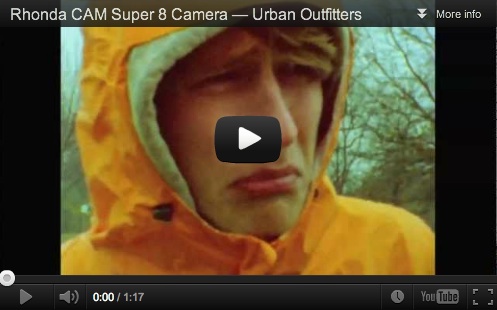
 
Click for Urban Outfitters Rhonda CAM demo on UO TV 

A few months after the camera's release, a publicly traded American company that owns and operates over 400 retail locations across five retail brands: (Urban Outfitters, Anthropologie, Free People, Terrain, and BHLDN), contacted Pro8mm about adding the Rhonda CAM to their growing film and camera line. Urban Outfitters originated as "The Free People's Store" in 1970 in Philadelphia, Pennsylvania, focusing on fashion and household products that include luxury brands and several designer collaborations. They are best known for catering to "hipster" culture, which incorporates an influence from past decades. (Wikipedia) It makes perfect sense that a Super 8 camera refurbished from the 1970's would fit entirely into their vision. It is an honor for Pro8mm that Urban Outfitters chose the Rhonda CAM as their first motion picture film camera for their film and camera department, among their many trendy still photography cameras.

As a small, family run business, Pro8mm is thrilled to have their products endorsed by a major retail store such at Urban Outfitters. Marketing coordinator, Jaclyn states, "We are very excited and honored to be a part of the Urban Outfitter's family."

Checkout the Rhonda CAM on Urban Outfitters.com!!!
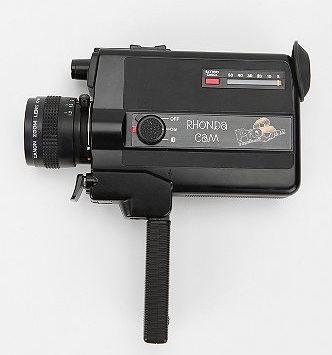
RhondaCAM        RhondaRoll
Rhonda CAM on Urban Outfitters          Rhonda Roll on Urban Outfitters

Additional Releases about the Rhonda CAM:


Follow the Rhonda CAM on:

Pro8mm is applauded for being a one-stop shop where Super 8 and 16mm cameras, film, processing, digital mastering and treasured family archival services come together for production and archiving. Pro8mm is viewed as the leading experts in Super 8 film, whose products and services have been used in major motion pictures, music videos, television shows, commercials, documentaries, weddings and more. All of our services are performed in house, which allows our dedicated team to provide the fastest turn around times possible with the best quality control for your filmmaking needs.

Thursday, February 23, 2012

HEALING WITH HOME MOVIES


I have often told my clients over the years that one of the most often overlooked, but important reasons that you want to move your home movie archive onto a hard drive, sooner rather than later is to “BE READY”.  

While we often associate Being Ready with a planned event such as that 50th anniversary party or retirement dinner happening sometime in the future, there are other times in life that you find you will want to be ready for something unexpected.

Our family recently had the tragic experience of loosing a family member quite suddenly.  In the shock and sadness of this also came the realization that we, as the keepers of the family archive would have only a few days to edit together a beautiful memorial piece that would be shown at the Wake. Instead of being a daunting task trying to collect material from various people and sources and rushing to get them hastily digitized, because we were ready, the experience was in an unexpected way part of our healing.  Because we were ready, we found that the process  of putting together this tribute piece offered us a feeling of comfort, and was a vital part of our mourning and grieving. As we scrolled through her life on film from baby, to child, to teen, to bride, to mother, and so much more, we laughed, we cried, and most of all we were grateful that we would be able to bring others comfort in their sadness with an amazing story of wonderful memories of our loved ones life, which we set beautifully to music. 

More importantly, we could do the editing ourselves, without the assistance of strangers or a company recommended by the funeral home.   Just about a year ago we encoded the entire family archive that was  gathered from several generations of different family members home movies  and put it on to file format.  This was a huge improvement from our prior version which was DVD.  You can not edit a DVD, so there was  no option for extracting clips.  This version has the home movies encoded to digital files on a  Codec called  Pro Res  422.   The entire archive was organized into playlists on several hard drives. This encoding gave us the ability to plug the hard drive into our Mac Computer  and we could quickly scan through each film and extract clips of our loved one throughout her life.   We were then able to  edit the clips to tell a story.  We are not experienced editors, but these new programs are extremely easy to use.  We used Final Cut Pro, but imovie, or any computer base editing system (compatible with the Codec you chose) will work.  We found appropriate music.  The process took about 6 hours to look through 1 TB drive worth of material, select our clips and edit them. 

We were able to burn our  10 minutes edited piece onto a  DVD to play on a loop at the Wake.  In addition, we  burned  copies to give to family members so that they would have this tribute as a permanent memorial to our loved one.  The power of this cannot even be put into words. 

 I think especially during those private moment of sadness and grieving, the ability to create a story without the assistance of strangers or a hired production company is so wonderful.  It is an extension of the love you feel for the departed, and allows you to  tell the story that you want to tell, the way you want to tell it as a visual eulogy.

I hope this post will help motivate you to be ready for whatever life’s events can be more fully realized through the memories and healing power that lie within your family films.  Our loved ones and their legacy live on and are sustained through our photographs and films.  Take care of them, and treat them with the integrity they deserve. 

"Mourning is one of the most profound human experiences that it is possible to have... The deep capacity to weep for the loss of a loved one and to continue to treasure the memory of that loss is one of our noblest human traits". (—Edwin Shneidman, 1980)


sample home movie scan in HD to Pro Res  http://vimeo.com/32595596   


Wednesday, December 7, 2011

James Chressanthis uses Max 8 in TNT's Mystery Movie Night: HIDE

Last night I watched in awe the remarkable use of Super 8 film in the TNT made for TV movie HIDE. Based on a thriller mystery novel by Lisa Gardner, the film was directed by James Gray and beautifully shot by cinematographer James Chressanthis, ASC. Hide marks their reunion, as they have collaborated on other projects such as Ghost Whispers and Brian’s Song.

The deliberate choice by Chressanthis to shoot full Max 8 to punctuate the numerous flashback scenes by different characters in the story had a strong aesthetic punch. Never did you feel as if you were watching a home movie, but rather a vivid porthole into the memory of painful events that these characters were being asked to retell investigators. 

Chressanthis chose our MAX 8 1014 XLS camera with crystal for the Super 8 sequences. Shooting was done with  Pro8/19, a Kodak Vision 3 200T film stock that is highly versatile for both bright and low light conditions. The film has 13 stops of latitude, extremely fine grain, and an ultra wide exposure range. It captured both the shadows and highlight details so well that  in some shots you could actually see the skeletons of the mummified bodies inside the hanging body bags down in a low lit  underground pit.

We scanned the film in native 1080 to ProRes 4:4:4 HQ with 3 separate passes at different frame rates. "We shot mostly at 9FPS on the Max 8 camera. Editorially they used all the frame rate transfers:  24, 12, 6 fps.
I shot the various frame rates to speed up, slow down and blur the image and also to increase the grain.
That's because normal Super 8 is so clean that it can look like good 16mm but we wanted an edgy, grittier 
look in representing the deep memories of the characters. It looks fantastic! " says Chressanthis.

Plot Summary: Carla Gugino (Californication, Entourage) plays Boston Police Detective D.D. Warren, who is called to the grounds of an abandoned mental hospital where a buried chamber is discovered. Inside are the mummified remains of six young women, who have all been missing for years. The case leads D.D. to Annabelle, played by Bridget Regan (Legend of the Seeker). Annabelle is a young woman who spent her childhood moving from city to city, from identity to identity, hiding from someone or something totally unknown to her. D.D. uses clues from Annabelle's secret past to unravel the mystery behind her twisted family history. Mark-Paul Gosselaar (TNT's Franklin & Bash, NYPD Blue) and Kevin Alejandro (True Blood, TNT's Southland) also star. Hide is written by Janet Brownell (Eloise at the Plaza), directed by John Gray (Ghost Whisperer, Helter Skelter) and executive-produced by Stephanie Germain (The Day After Tomorrow)  (summary from TNT website)

Chressanthis has used Pro8mm workflows is such projects as No Subtitles Necessary (2008)and Brian's Song (2001). He is a three time Emmy Award Nominee, and has been a member of the ASC since 2002.

If you missed last nights premier, check for an opportunity to stream it  directly from TNT’s website http://www.tnt.tv.

Friday, August 27, 2010

Super 8 Film Event in Hollywood

Sunday Night - The Power of Super 8 Film Hollywood

Please join us Sunday Night for a two hour seminar on The Power of Super 8 Film, 6PM, The Neon Venus Theater , 3023 Melrose Ave.

Wednesday, June 9, 2010

Cine Gear Interview - Do A Shot With Pro8mmm

CHECK OUT OUR INTERVIEW WITH JAG MAGAZINE!

We had an amazing event at CineGear Expo! Over 50 people did "A SHOT WITH PRO8MM' -
Free film, processing, scanning and training with our camera or their!  What a GREAT event!

Tuesday, June 8, 2010

DO A SHOT WITH PRO8MM HUGE SUCCESS @CineGear Expo

http://www.facebook.com/photo.php?pid=30826779&id=1120218623

Pro8mm brought The Power of Super 8 Film To CineGear Expo on June 4 & 5th, Paramount Studios.
We put Super 8 camera in the hands of over 50 people over the two days! Participants got a free roll of Pro8mm Super 8 film (and a free T Shirt)  and the chance to borrow one of our cameras if they did not bring their own. After a little hands on instruction, they went around the expo and shot their roll. This week we are processing all the film and scanning it in native 1080 HD to Pro Res 422 and giving it back to the on a data DVD to edit. We will put an edited piece of all the film shot together for you to see!  A $110 value for free - just to have the shooting experience!

Thursday, April 22, 2010

Hollywood News Writes About The Power of Super 8 Film

Hollywood News Writes About The Power of Super 8 Film

Cine journalist Bob Fisher writes about Phil Vigeant's book, The Power of Super 8 Film. To purchase the book, or find out about one of our workshops or seminars go to www.thepowerofsuper8film.com

Monday, November 9, 2009

8 Tips For Shooting Modern Super8, by Philip Vigeant


A Few tips can go a long way

Parts of my job as senior colorist at Pro8mm, is that I get to scan about a million feet of super8 film each year. In doing so I get to see what is happening in the super8 world with some vantage point based on volume. I look at my work as a two-part job. One, as a creative colorist, trying to get the most information off of the frames for our customers, and second, as an inspector looking for bugs in the over all super 8 process. When I see something that needs improving, I try to see what I can do with the technology at hand to facilitate a positive change. Internally, I can talk to my employees who are the people most responsible for each area and together we try to attack the issue. Externally, it is much more difficult. You have competitive concerns to address, and some companies just do not see these problems as issues the way I might. In addition, there are things that are totally beyond my control that can play a major roll in great looking super8 footage. These things are up to the filmmaker. Each year the technology for scanning film to digital seems to improve, resulting in more things that I can fix. Native 1080 HD film scanning now provides me with tremendous processing power to do many things that were impossible just a year ago. There are new things on the horizon as well, which will give us even greater ability to improve an imperfect image. However, there are a few things that if the filmmaker does not get right, there is very little that can be done to remedy the problem, no matter how much technology you have at hand.

As the years progress the problems seem to change and evolve with each new generation. For those who grew up with film as the main picture-taking medium some things were learned at every juncture of the photographic process. Things such as focus were so common knowledge of that generation that we often forget that this is knowledge that you have to learn. A colleague of mine who teaches filmmaking here in California said that he has to spend days of the semester going over some of this basic stuff. Therefore, here is my short list 2009 of the 8 most common areas of concern I see every day in transferring film. I hope that a few quick tips and expatiation can help you create better images with your super8 camera.


# 1 Hair in the Gate:

Because of the nature of film and the way it travels through a camera and exposes each frame, the system will build up debris in the gate that if it is allowed to accumulate, and this will block some of the image. The metal gate frames the film with what should be a smooth black border. Because you are running film over metal, it tends to leaves tiny deposits on the gate as the film passes over it. This emulsion residue is a gummy substance that is barely visible to the naked eye. If this is not cleaned, from your camera, from time to time you can have several problems. First, the gummy glue can trap foreign

Substances like hair, lint, and dust and hold it firmly, often where the image is taken in a camera. The result are these ugly black globs which start around the boarder that blocks some of your image usually on the edges but sometimes big enough to block a lot of picture. Depending on the size of these foreign obstacles, a hair in the gate can ruin a shot. In addition, the build up of emulsion can get so bad that your camera can physically scratch the film. The fix for these problems are very simple. Go to the store and purchase a child’s toothbrush. Gently brush a few strokes between every cartridge. Every, single cartridge! It is amazingly simple but incredibly effective. Do not use compressed air as all that will do is blow dirt around and it might blow debris into somewhere you cannot get it out. In addition, compressed air does not often have the force to move the object because remember, it is stuck in place. Do not use a Q-tip, as the chance of leaving a fiber of cotton is greater then the good you will do by performing the cleaning.

If your camera has never been cleaned, you might need to do some more extensive work. Once it is clean, the brush trick is all that should be need to keep you hair free.


#2 the 85 Filter Situation

In the beginning, all super8 film was Tungsten Balance, which means that the film will produce true colors under tungsten light. If you wanted to get correct colors in daylight, you had to use an orange filter called an 85 (sometimes called 85A). For convenience, every Super 8 camera was built with an internal 85 filter. The filter was usually ??? in place because most filming was done outside in daylight. There were some clever ways to take out the filter when you were filming in Tungsten (Interior Light). The filter removal system could be activated by the super8 cartridges notch system, or by a switch, or by sticking something into a place in the camera to take it out or some combination of these things.

Every super8 camera manufacturer had their own idea as to how this should be done.Text Box:  Today, you have dozens of super8 film stocks that can be either daylight or tungsten color balanced. When you film in daylight with daylight film, you do not want to use an 85 filter. At Pro8mm we. have been taking the internal filters out of super8 cameras for many years now. When this is done correctly, it can greatly improve the optical performance of a camera. Today because you can buy daylight film, it is actually inconvenient to have the internal 85 filter. Some film manufacturing companies prescribe to the cartridge notch for 85-filter removal and some do not. The standard for dealing with this 85 thing are a mess, so it is up to you the filmmaker to understand what how you camera handles this and that film you are using the correct film for your filming environment, daylight or tungsten to get this correct. Although you can do some amazing color, correction in post if you do not get this right you will never achieve the brilliance in color your images can have. In addition, all this correcting takes time, which cost money.

(insert photo EXAMPLE: Pro8-85 shot correctly Daylight no filter Shot on New Pro814 Wide. Pro8-80 shot incorrectly attempted fix in post)

What make this a little challenging is in most super8 cameras the 85 was placed behind where it can be seen with the viewfinder optics. If your camera has a switch or you toggle between the two setting for filter in and out you will not be able to see the effect of having the filter in by looking in the viewfinder. The major exception to this would be Beaulieu cameras that have a reflex viewfinder where the entire image path is viable in the viewfinder.

If you do not own a Beaulieu you must open up the camera door where you insert the film and look through the camera body. Put your eye in line with what the film will see. You must run the camera to see through. It also will help if you point the camera at something dark so the exposure system is open, or manually set the camera to exposure wide open. Once you find a position where you can see light through the camera body flip the switch that goes between the 85 filters in and out. You should see the light turn a darker orange when the filter is in. However, you are not done. Take the super8 cartridge you are about to use and put it in the camera. While doing so, look to see if it is flipping and if there is a type of lever in the camera. Now go back to check your camera and make sure that the position the cartridge has not effected the switching. The other approach is to make sure all your settings are correct and the cartridge has the correct notch for the 85 filters. A cartridge with a notch for the 85 filters will not remove the filter. A cartridge without a notch will automatically remove the filter. In some cameras, an external switch can override this, but in others, if the notch removes the 85 filter it cannot be returned with the switch.

Monday, August 24, 2009

8 Tips for Shooting modern Super 8


I read allot about Super 8 in chat rooms and forums and I am always amazed how much misinformation there is. There seems to always be an on going battle between people trying to jockey themselves as the most informed expert. This wrong information and half truths hurts filmmakers. I checked on AMAZON.com and there is nothing on MODERN SUPER 8. The last book I found was written in 1981. So I though it would be helpful to have some tips for shooting modern Super 8.

Instead of giving you all 8 tips at once, I'll give them to you one at a time so that hopefully you will keep coming back and read my Super 8 blog! While some of the tips I am going to give you are “old school” common sense that any film maker working with super 8 or 16mm film should do/should have done at any time in their shooting career , some have to do directly with the new modern negative film stocks, our Max 8, 16 x 9 super 8 cameras and native 1080 HD scanning.


A Few tips can go a long way, by Phil Vigeant, owner and senior colorist at Pro8mm

“Parts of my job as senior colorist at Pro8mm, is that I get to scan about a million feet of super8 film each year. In doing so I get to see what is happening in the super8 world with some vantage point based on volume. I look at my work as a two-part job. One, as a creative colorist, trying to get the most information off of the frames for our customers, and second, as an inspector looking for bugs in the over all super8 process. When I see something that needs improving, I try to see what I can do with the technology at hand to facilitate a positive change. Internally, I can talk to my employees who are the people most responsible for each area and together we try to attack the issue. Externally, it is much more difficult. You have competitive concerns to address, and some companies just do not see these problems as issues the way I might. In addition, there are things that are totally beyond my control that can play a major roll in great looking super8 footage. These things are up to the filmmaker. Each year the technology for scanning film to digital seems to improve, resulting in more things that I can fix. Native 1080 HD film scanning now provides me with tremendous processing power to do many things that were impossible just a year ago. There are new things on the horizon as well, which will give us even greater ability to improve an imperfect image. However, there are a few things that if the filmmaker does not get right, there is very little that can be done to remedy the problem, no matter how much technology you have at hand.

As the years progress the problems seem to change and evolve with each new generation. For those who grew up with film as the main picture-taking medium some things were learned at every juncture of the photographic process. Things such as focus were so common knowledge of that generation that we often forget that this is knowledge that you have to learn. A colleague of mine who teaches film making here in California said that he has to spend days of the semester going over some of this basic stuff. Therefore, here is my short list 2009 of the 8 most common areas of concern I see every day in transferring film. I hope that a few quick tips and expatiation can help you create better images with your super8 camera.” – Phil Vigeant(c) 2009

TIP #1 HAIR IN THE GATE

Nothing is more aggravating for us and to you when we get absolutely gorgeous footage up on the scanner and there is a big yucky piece of dirt or hair in the frame. Just a small effort on your part will make your footage sparkle! BRUSH YOUR CAMERA GATE!

“Because of the nature of film and the way it travels through a camera and exposes each frame, the system will build up debris in the gate. If it is allowed to accumulate, this will block some of the image. The metal gate frames the film with what should be a smooth black border. Because you are running film over metal, it tends to leaves tiny deposits on the gate as the film passes over it. This emulsion residue is a gummy substance that is barely visible to the naked eye. If this is not cleaned from your camera, from time to time you can have several problems. First, the gummy glue can trap foreign substances like hair, lint, and dust and hold it firmly, often where the image is taken in a camera. This results in these ugly black globs which start around the boarder that blocks some of your image usually on the edges, but sometimes big enough to block a lot of picture. Depending on the size of these foreign obstacles, a hair in the gate can ruin a shot. In addition, the build up of emulsion can get so bad that your camera can physically scratch the film. The fix for these problems is very simple. Go to the store and purchase a child’s toothbrush. Gently brush a few strokes between every cartridge. Every, single, cartridge! It is amazingly simple but incredibly effective. Do not use compressed air as all that will do is blow dirt around, and it might blow debris into somewhere you cannot get it out. In addition, compressed air does not often have the force to move the object because remember, it is stuck in place. Do not use a Q-tip, as the chance of leaving a fiber of cotton is greater then the good you will do by performing the cleaning. If your camera has never been cleaned, you might need to do some more extensive work. Once it is clean, the brush trick is all that should be need to keep you hair free.

Pro8mm includes a free camera gate brush with every rental or purchase. They are also available for sale on our website for $5.00 at www.pro8mm.com. A nifty little tool that folds up small and has an attached cover, so you don’t have to worry about loosing it. Once you use it on your camera, we do not advise using it as a substitute for gum or mints when you have been on the set all day, or for that matter, the other way around! www.pro8mm.com

Tuesday, August 11, 2009

Grand Opening Of Our On Line Store


Customize your own package with multi format options, buy film and processing, a camera package, or just "play" with a quote. We have re-launched our on-line store. Look for products and specials in the days to come. Email us with feedback on what you would like to see, info@pro8mm.com.

Shop till you drop at Pro8mm!818-848-5522 2805 W. Magnolia Blvd., Burbank, CA 91505

www.pro8mm.com

Monday, June 29, 2009

Kurt Markus Sets Mellencamp Documentary Project


We just got the official Press Release and can't wait to share the news! Kurt Markus will film John Mellancamp on tour this summer armed with two Max 8 Classic Pro Cameras with crystal sync and tons of Pro8mm film. The project will be scanned in native 1080 on our M2 scanner. The test footage we have seen so far looks amazing! We have worked with Markus on Music Videos for Jewel (Goodbye Alice) and we love his camera work and up close and personal technique.

NEWS from Bob Merlis/M.f.h.
606 N. Larchmont Blvd. #102
Los Angeles, CA 90004
323.962.6887
bobmerlis@bobmerlis.com


FOR IMMEDIATE RELEASE

KURT MARKUS SETS MELLENCAMP DOCUMENTARY PROJECT

Kurt Markus, whose still work has put him in the front ranks of contemporary American photographers is about to embark on a film project that will document a journey he?ll be taking this summer with John Mellencamp. Markus? extraordinary vision and focus on the American West has earned him critical accolades over the course of his 35 year long career in photography that has seen his work published in Vanity Fair, GQ, Rolling Stone, Travel and Leisure, New York Times Magazine, Outside, Esquire, Texas Monthly, Entertainment Weekly, Vogue and Best Life as well as overseas outlets. He was recipient of Life Magazine?s Alfred Eisenstaedt Photography Award for his Rolling Stone ?Sports Hall of Fame? shots of triathelete Peter Kotland.

This summer he will accompany Mellencamp with a classic Super 8 camera, capturing him on tour and as he records an album of new songs. Ian Markus, his son, is his assisting cameraman and will film digitally and capture sound. The expectation is that Markus? approach to production will capture the unrefined truth of his experience with Mellencamp over the course of July and August.

Mellencamp will record the album at a variety of historic locations during days off from his forthcoming summer tour with Bob Dylan and Willie Nelson. Sessions will take place at the First African Baptist Church in Savannah, GA, Sun Studios in Memphis and San Antonio?s Gunter Hotel. Much of the album will be recorded on location using AMPEX 601 tape recorder made in 1951 and an RCA microphone from 1949. At Sun, Mellencamp and a rhythm section will use equipment similar to that which Sam Phillips used when he first recorded Johnny Cash, Carl Perkins and the other legendary Sun Records artists. T Bone Burnett, who produced last years critically acclaimed Life Death Love and Freedom is producing No Better Than This as well.

Markus, who was born in Montana and still lives in that state, made his mark in landscape, figure study, celebrity, fashion and travel. Exhibitions of his work have been mounted by the Cowboy Hall of Fame, Hills Gallery, Halsted Gallery, Staley-Wise Gallery, Gallery for Contemporary Photography and Galleria Photology. Markus published several monographs, including After Barbed Wire, Buckaroo, Dreaming Georgia, Boxers, Cowpuncher, and Dune. He has undertaken commercial assignments for Armani, BMW, Sony, Levis, Calvin Klein and Nike.

Staley-Wise Gallery in New York, The Rose Gallery in Los Angelse and Photology in Milan represent Kurt Markus? work.

# # #

Available now:


John Mellencamp on tour with Bob Dylan and Willie Nelson
July 2 - Sauget, IL - GCS Ballpark

4 - South Bend, IN - Coveleski Stadium

8 - Louisville, KY - Louisville Slugger Field

10 - Dayton, OH - Fifth Third Field

11 - Eastlake, OH - Classic Park

13 - Washington, PA - CONSOL Energy Park

14 - Allentown, PA - Coca Cola Park

15 - New Britain, CT - New Britain Stadium

17 - Essex Junction, VT - Champlain Valley Exposition Center

18 - Bethel Woods, NY - Bethel Woods Center For The Arts

19 - Syracuse, NY - Alliance Bank Stadium

21 - Pawtucket, RI - McCoy Stadium

23 - Lakewood, NJ - First Energy Park

24 - Aberdeen, MD - Ripkin Stadium

25 - Norfolk, VA - Harbor Park

28 - Durham, NC - Durham Bulls Athletic Park

29 - Simpsonville, SC - Heritage Park Amphitheater

30 - Alpharetta, GA - Verizon Wireless Amphitheater @ Encore Park

31 - Orange Beach, AL - The Amphitheater at the Wharf

Aug. 2 - Houston, TX - Cynthia Wood Mitchell Pavillion

4 - Round Rock, TX - The Dell Diamond

5 - Corpus Christi, TX - Whataburger Field

7 - Grand Prairie, TX - QuikTrip Park

9 - Albuquerque, NM - Journal Pavillion

11 - Glendale, AZ - Camelback Ranch

12 - Lake Elsinore, CA - The Diamond Park

14 - Fresno, CA - Chukchansi Park

15 - Stockton, CA - Banner Island Park

Wednesday, May 13, 2009

Pro Rez Price List


Save money when you go to Pro Res! The Pro Res HD prices are less than our standard HD package prices because there is no cost of tape! Plus, they are a dream to edit with in Final Cut Pro. Packages include your film, processing, scanning, prep and clean and full scene-to-scene color correction on the M2 scanner to hard drive.

Super8 Pro Res 422 HQ Prices

Tester (1) $108
Sampler (4) $336
Sampler (6) $454
Sampler (8) $558
Sampler (10) $672
Movie trailer (12) $767
Short film (24) $1420
You tube (36) $1985
Music video (48) $2595
Documentary (96) $5081
Feature film (192) $9965

16mm Pro Res 422 HQ Prices
Tester (1): $180
Sampler (4): $520
Sampler (8): $860
Movie Trailer (12): $1,185
Short Film (20): $1,910
Music Video (40): $3,635
Documentary (80): $6,880
Feature (160): $12,600


*No downloading fee if your hard drive is formatted MAC, and has a properly functioning ESATA or Fire Wire 800 Drive, or you purchase a drive from Pro8mm.

Tuesday, February 10, 2009

The "New" Super8-85


(Actual super 8 frame shot with this film stock)

We now have an excellent supply of the extremely popular Super8 85 – ASA 100 Daylight Reversal. Clients love this stock and many say it is the best replacement film for discontinued Kodachrome 40. Super 8 85 is now being made from double super 8-85, supplied by Kodak, slit and loaded at Pro8mm. It has 3 stops of latitude and very fine grain. This is a traditional reversal film stock, suitable for projection, or it can be cross-processed as a negative. Cartridges sell for $30 a roll which includes our award winning processing, You can also purchase a test package which includes a native 1080 scan on our Millennium 2 to HD on Blu Ray Disk for $108.00, or in SD to DVD for $88.88. Look for a sample of this stock on Vimeo shortly.